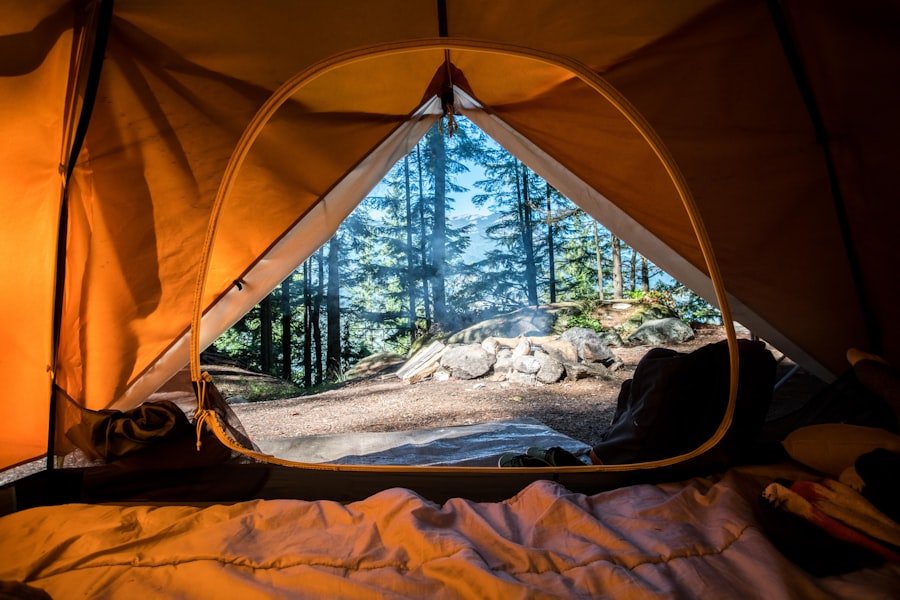
Camping in the UK is not the weather-roulette that its reputation suggests. The Met Office's statistics show that July and August in most of England average fewer than 12 days with measurable rainfall — not a guarantee of good weather, but not the sodden fortnight the popular imagination conjures either. The issue is not the average, but the variance: British weather can produce warm, dry conditions and horizontal rain within the same 48 hours.
Choosing a Site
The two main categories of UK campsite are the fully serviced site — hard standing pitches, electric hook-ups, shower blocks, laundry facilities — and the simpler "back to basics" site with grass pitches, a water standpipe and basic toilet facilities. For first-time campers, the serviced site is generally more comfortable. For those who want a quieter, more rural experience, the simpler sites often have better locations.
The Camping and Caravanning Club and the Caravan and Motorhome Club both operate extensive networks of well-maintained sites. The Cool Camping and Pitchup platforms are useful for finding more characterful independent sites. Certificated Locations (CLs) — small sites of up to five pitches in private land — offer a genuinely quiet and often beautiful alternative to commercial sites.
The Kit That Actually Matters
Tent: For UK camping, a three-season tent with a sewn-in groundsheet and taped seams is the minimum. The tent's hydrostatic head rating (HH) indicates waterproofing — 2,000mm is adequate; 3,000mm+ is reliable in sustained rainfall. Freestanding geodesic domes are more wind-resistant than tunnel designs for exposed locations.
Sleeping bag and mat: A bag rated to at least 5°C for summer camping; to -5°C if camping in upland areas or shoulder seasons. The sleeping mat matters as much as the sleeping bag — ground cold is conducted more efficiently than air cold, and a thin mat significantly reduces insulation.
Footwear: Waterproof boots and a pair of sandals or Crocs for the campsite itself. The combination covers wet morning grass and dry afternoon walking.
Shelter from wind and rain: A tarpaulin or porch extension for sitting outside in wet weather is more consistently useful than any other additional piece of kit. The ability to cook and eat under cover regardless of conditions transforms the camping experience.
The Weather Reality
The driest areas of the UK for camping are the east coast and southeast of England. The wettest are the western coasts of Scotland, Wales and the Lake District — which are also, not coincidentally, some of the most scenic. The trade-off is real: the greenest, most dramatic landscapes tend to be where the rain falls most regularly.
The practical response is not to avoid these areas but to be properly equipped for them and to have activities that work in wet conditions. A day on a hill in the rain is genuinely miserable; the same day walking in properly waterproof clothing with a warm pub at the end is often memorable in the best way.
Finding Sites
Pitchup.com — comprehensive UK campsite search with real reviews
coolcamping.com — curated selection of more characterful UK sites
campingandcaravanningclub.co.uk — large network of well-maintained sites, including Certificated Locations